


Footsteps of Paul and Best of Turkey
The apostle Paul was born here. Along with Peter, John, Philip, Bartholomew, Thomas, Jude, and Simon, they lived, preached, and prayed here. Come with Brent Top on this tour of Turkey, “the other Holy Land.” Two-thirds of the 27 books in the New Testament were either written in Turkey or were addressed to communities there, including Ephesians, Colossians, Philemon, Galatians, 1 & 2 Timothy, 1 & 2 Peter, and Revelation, which was addressed to the seven churches in Ephesus, Smyrna, Pergamum, Thyatira, Sardis, Philadelphia, Laodicea. Join us and enhance your study of the New Testament like never before.
Day 1FRIDAY, OCTOBER 15✈ Travel
Depart US
Our journey begins with an overnight flight from the United States.
By the end of this trip we will have stood in the city where Paul was born, in the city where believers were first called Christians, and in the theater at Ephesus where the riot broke out. Use the hours in the air to read ahead in Acts.
Day 2SATURDAY, OCTOBER 16
Arrival to Istanbul
Welcome to Turkey. We are met at the airport in Istanbul and transferred privately into the old city for our first night.
Paul never preached here. In his day this was Byzantium, a modest Greek town on the straits. What grew on this spot afterward matters a great deal to anyone reading church history: as Constantinople it became the seat of the emperors who called the early councils, where the creeds that shaped historic Christianity were argued, voted, and enforced.
We will spend our first and last nights in that city.
Today is for settling in and shaking off the flight. Optional for those who want it: a hamam, the Turkish bath, an old ritual of steam, hot marble, and a thorough scrub.
Dinner and overnight in Istanbul.
Day 3SUNDAY, OCTOBER 17
Full Day Istanbul Tour
We begin on foot at Hagia Sophia, early, before the cruise ships empty into the old city.
For close to a thousand years this was the largest church in Christendom. It is worth standing under that dome for a while and thinking about what happened to the church after the apostles were gone.
We continue to Topkapi Palace and its museum, Hagia Irene, and the Archaeological Museum, then the Blue Mosque and the Hippodrome, the long open square where the chariot races and the Byzantine riots took place. We finish at the Basilica Cistern, a sunken forest of columns that held the water supply of the old city.
Later we walk through the Spice Bazaar, where the air carries cinnamon, saffron, mint, and thyme. Optional this evening: a Whirling Dervishes ceremony, the turning prayer of the followers of Rumi, the 13th century poet and mystic.
Dinner and overnight in Istanbul.
Day 4MONDAY, OCTOBER 18
Istanbul - Adana by flight
We drive out this morning to Kariye, the old Chora church, which holds some of the finest Byzantine mosaics and wall paintings anywhere.
If it is open to visitors we will go in, and we will also stop at the Theodosian Walls, the land defenses that kept this city standing for centuries.
Then we fly south to Adana and the Cilician plain. This is Paul's own country. He was born a short drive from where we sleep tonight, and the passes and coastal roads around us are the ones he used going north and west on his journeys. In Acts he is a man of two worlds, a Roman citizen from a Greek university town and a Pharisee's son, and this is where those two worlds met.
Dinner tonight is at a local restaurant. Overnight in Adana.
Day 5TUESDAY, OCTOBER 19
Adana – Antioch – Adana
After breakfast we drive to Antioch on the Orontes, where believers were first called Christians (Acts 11:26).
We will visit the cave church of St Peter, cut back into the hillside above the city, where they are said to have met in secret.
Antioch is where the gospel first moved out to the Greeks in numbers (Acts 11:19-26), where the Spirit called Barnabas and Saul to be sent out (Acts 13:1-3), and where Paul and Silas departed on the second missionary journey (Acts 15:35-36). Antioch was later the city of Ignatius and John Chrysostom.
In Acts 2:9, pilgrims from Cappadocia were assembled with the thousands in Jerusalem on the Day of Pentecost when they received the baptism of the Holy Ghost and heard the Apostle Peter preach his powerful message. We will be standing in their country in two days.
Drive back to Adana for dinner and overnight.
Day 6WEDNESDAY, OCTOBER 20
Adana – Tarsus – Cappadocia
This morning we drive to Tarsus, where Paul was born.
He was proud of it. He told a Roman officer he was a Jew of Tarsus, a citizen of no mean city (Acts 21:39), and told the crowd he was born there and brought up at the feet of Gamaliel (Acts 22:3). When the Lord sent Ananias down the street called Straight, the man he was to find was Saul of Tarsus (Acts 9:11).
We visit the well traditionally identified as Paul's, the Roman gate long known as Cleopatra's Gate, and the recent excavations.
Then we climb north onto the high plateau into Cappadocia and visit the underground city at Kaymakli, one of the best preserved of these carved cities, where whole communities, Christians among them, lived below ground when it was not safe above it.
Dinner and overnight in Cappadocia.
Day 7THURSDAY, OCTOBER 21
Full Day Cappadocia Tour
Optional at sunrise: a hot air balloon ride over the valleys.
Paul never preached in Cappadocia. Its people came to him and to the other apostles instead. Cappadocians were in Jerusalem at Pentecost (Acts 2:9), and Peter addressed his first letter to the strangers scattered through Pontus, Galatia, Cappadocia, Asia, and Bithynia (1 Peter 1:1).
Today is also the wider Turkey this tour promises.
We start in Devrent valley among the fairy chimneys, tall cones of soft volcanic rock left standing as the weather cut away everything around them. At Pasabag we see the houses people carved into that rock. After lunch there is a pottery demonstration in Avanos, a clay town on the Red River for thousands of years.
In the afternoon, the Goreme Open Air Museum, rock-cut churches painted between the 10th and 13th centuries, then Uchisar rock castle for the view over the valleys.
Dinner and overnight in Cappadocia.
Day 8FRIDAY, OCTOBER 22
Cappadocia – Pamukkale
A long drive west today, with the stop that matters in the middle of it.
We break at Konya, which the New Testament calls Iconium. Paul and Barnabas came here after they were run out of Antioch of Pisidia, and they preached in the synagogue long enough that a great multitude believed. Then the city split in two and they fled to Lystra and Derbe (Acts 13:51-14:6). Years later, near the end, Paul reminded Timothy of the persecutions he endured at Antioch, at Iconium, at Lystra (2 Timothy 3:11).
Timothy was from that stretch of road.
In Konya we visit the home of the Whirling Dervishes, the order founded around Rumi, whose tomb is here and still draws visitors from across the Muslim world.
We continue to Pamukkale. Dinner and overnight in Pamukkale.
Day 9SATURDAY, OCTOBER 23
Pamukkale - Kusadasi
Pamukkale means cotton castle, and the name is the plain truth.
Mineral springs have poured over a white cliff for millennia, leaving terraces of calcite, shallow basins, and what look like frozen waterfalls. The water changes color as the light moves.
Above the terraces stands Hierapolis, the Roman spa city built around those hot springs. Paul wrote from prison that Epaphras had a great zeal for the saints at Colosse, at Laodicea, and at Hierapolis (Colossians 4:13). We tour the Hierapolis open air museum.
Then we drive down to Laodicea, the last of the seven churches of Asia. Paul told the Colossians to trade letters with this congregation (Colossians 4:16). John told them they were neither cold nor hot, and that being rich and increased with goods they did not know they were wretched and poor (Revelation 3:14-22). The city sat rich on a crossroads, which is exactly the problem.
Drive to Kusadasi for dinner and overnight.
Day 10SUNDAY, OCTOBER 24
Kusadasi – Ephesus - Kusadasi
We begin at the Temple of Artemis, one of the seven wonders of the ancient world.
One column stands today.
Then Ephesus. We walk the marble streets past the state agora, the odeon, the Memmius monument, the temple of Domitian, Curetes Street, the Trajan fountain, the baths of Scholastica, the temple of Hadrian, the Celsus library, and the commercial agora. Paul worked here roughly three years (Acts 18-20). In the great theater the silversmiths shouted him down for two hours (Acts 19:23-41).
He later called the elders of this church to him and told them they would see his face no more (Acts 20:17-38). He wrote to this church, and wrote to Timothy while Timothy led it, and it is the first of the seven churches John addresses (Revelation 2:1-7).
We also visit the terrace houses, where wealthy Ephesians lived among frescoes and mosaics, and the Basilica of St John, built over the place tradition holds the apostle was buried after his last years here. A carpet weaving demonstration follows.
Dinner and overnight in Kusadasi.
Day 11MONDAY, OCTOBER 25
Kusadasi – Istanbul
We fly back to Istanbul this morning and give the afternoon to the water.
A private cruise takes us along the Bosphorus, the strait that separates Europe from Asia, past old wooden waterfront houses, marble palaces, fortresses, and small fishing villages. This narrow channel is why the city exists and why armies and empires spent a thousand years trying to hold it.
Afterward there is free time at the Grand Bazaar for whatever is still on your list.
We gather in the evening for our last dinner together, at a rooftop restaurant with a view over the city, and a chance to say out loud what the last ten days have meant. Overnight in Istanbul.
Day 12TUESDAY, OCTOBER 26✈ Travel
Home
After breakfast we check out and transfer to the airport for the flight home.
We have come from Tarsus to Antioch to Ephesus, most of it on Paul's own ground, and the book of Acts will not read the same way again.
Hotels
- Istanbul – Vogue Supreme Istanbul or Sura Hagia Sophia Hotel or similar
- Adana – Hiltonsa Adana or similar
- Cappadocia – Gamirasu Cave Hotel or MDC cave hotel or similar
- Pamukkale – Colossae Thermal Hotel or Pam Thermal or similar
- Kusadasi – Charisma Hotel sea view rooms or Korumar Hotel Sea view rooms or similar
What's included
- Professional licensed English speaking Tour Guide (Mr. Emre)
- 8 nights accommodation in 4 and 5 star hotels
- 2 nights accommodation in cave Hotel in Cappadocia
- 10 breakfast and 10 dinners ( Adana dinner in a local restaurant - farewell dinner in Arcadia Blue Hotel roof restaurant )
- Whirling Dervishes show in HodjaPasha
- Private Bosphorus Cruise in Istanbul
- Return private airport transfers
- Transportation by Brand-New A/C NON SMOKING coaches
- Parking, high-way fees
- Whisper set
- Wifi in the bus ( except Istanbul )
- 2 small bottles of water per person per day ( except Istanbul )
- All entrance fees to the sites stated above the itinerary
- Istanbul – Adana and Izmir – Istanbul domestic return flight tickets including airport tax by Turkish airlines 25 kilos check in and 8 kilos carry on luggage
- Accommodation tax and VAT
Not included
- Personal expenses
- Meals not indicated in includes section
- Drinks during meals
- Airfare to and from the tour
- Tips to driver & Guide
- Optional Tours
- ID / Passport
- Passports required, valid 6 months after tour end
- Tips & Gratuities
- Guide: $5-10/day; Driver: $3-5/day
- Physical Requirements
- Must be able to climb stairs and walk unassisted at a moderate pace
- Cancellation Policy
Deposits are non-refundable. If you cancel and the tour sells out, your deposit becomes a travel credit, good for two years from this tour's start date. After final payment, all payments are non-refundable. See our Terms & Conditions for the full policy.
- Airfare
Guests are responsible for arranging their own airfare to the tour’s starting destination and home from its ending destination. Airfare is not included in the trip price.
This trip follows our standard physical requirements and cancellation policies — see our Terms & Conditions. Anything specific to this trip is noted above and takes precedence.
| Price per person | |
|---|---|
| Triple occupancy | $2,995 |
| Double occupancy | $3,295 |
| Single occupancy | $4,395 |
Reserve with a $250 deposit per person; final payment due 07/15/2027.
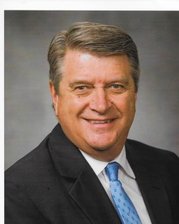
Brent L. Top
Brent L. Top is Professor Emeritus of Church History & Doctrine at Brigham Young University and former Dean of Religious Education. In his thirty-five years on the Religion faculty at BYU, Brent has authored or co-authored more than 20 books and numerous articles on doctrinal, scriptural, historical, and sociological subjects. He taught Old and New Testament at the BYU Jerusalem Center for Near-Eastern Studies and has led numerous Holy Land tours. Most recently, he served as mission president/site leader at the Mormon Battalion Historic Site in San Diego (2022-2024) and was president of the Il…
Full profile ›